
MEHRIN – Museum of Water and the Blind
Water, Perception & the Human Measure of Civilization
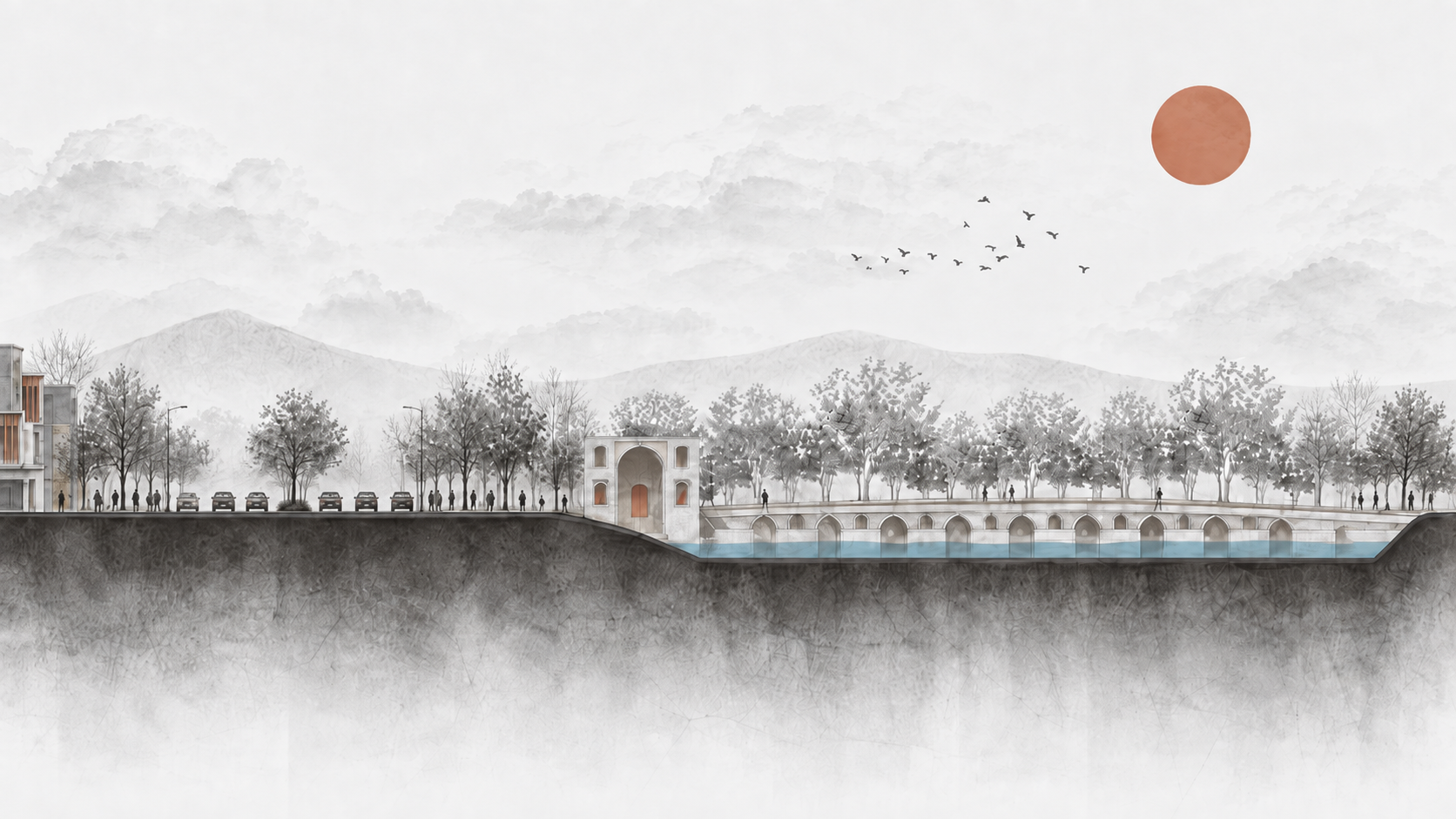
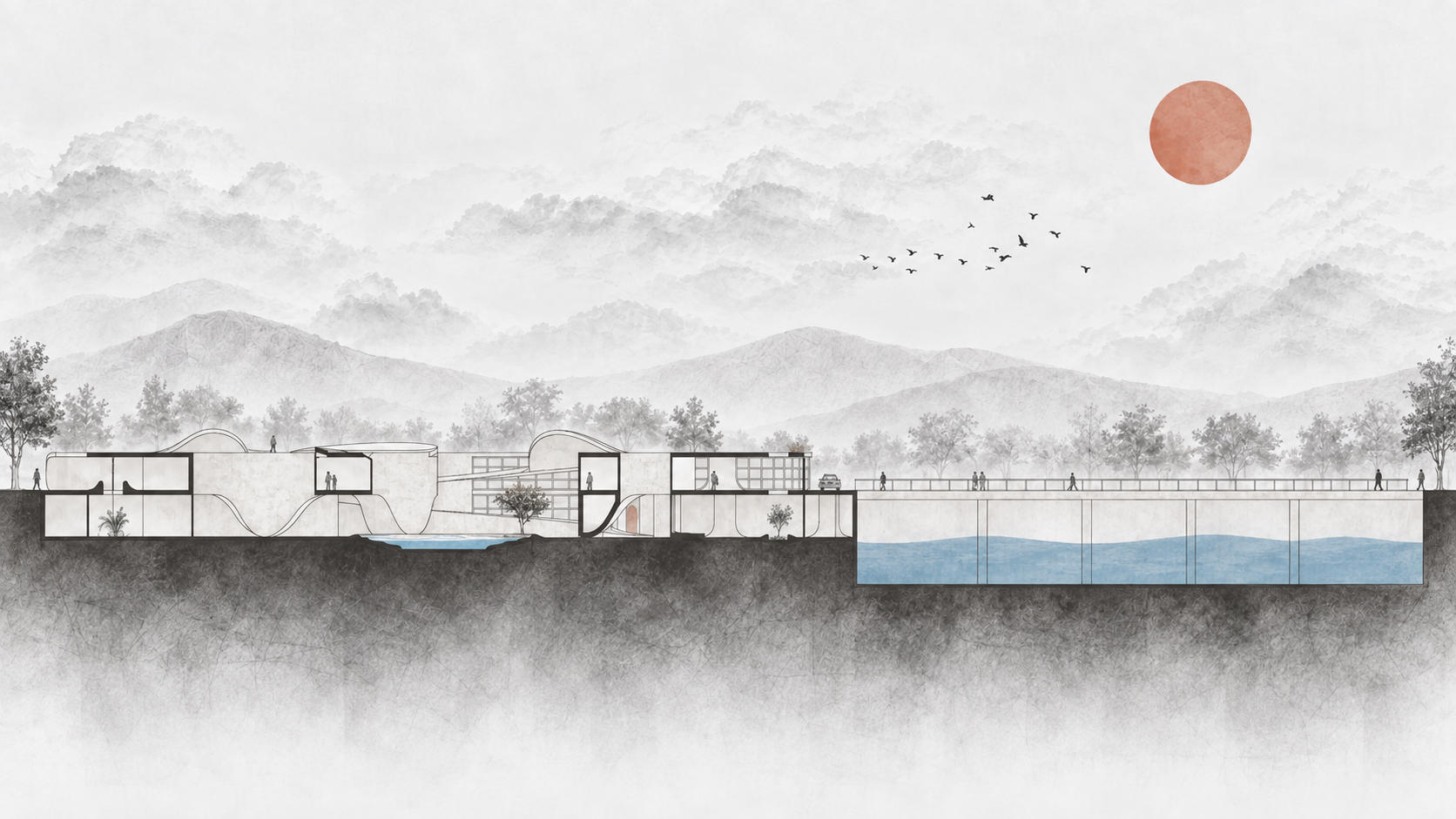
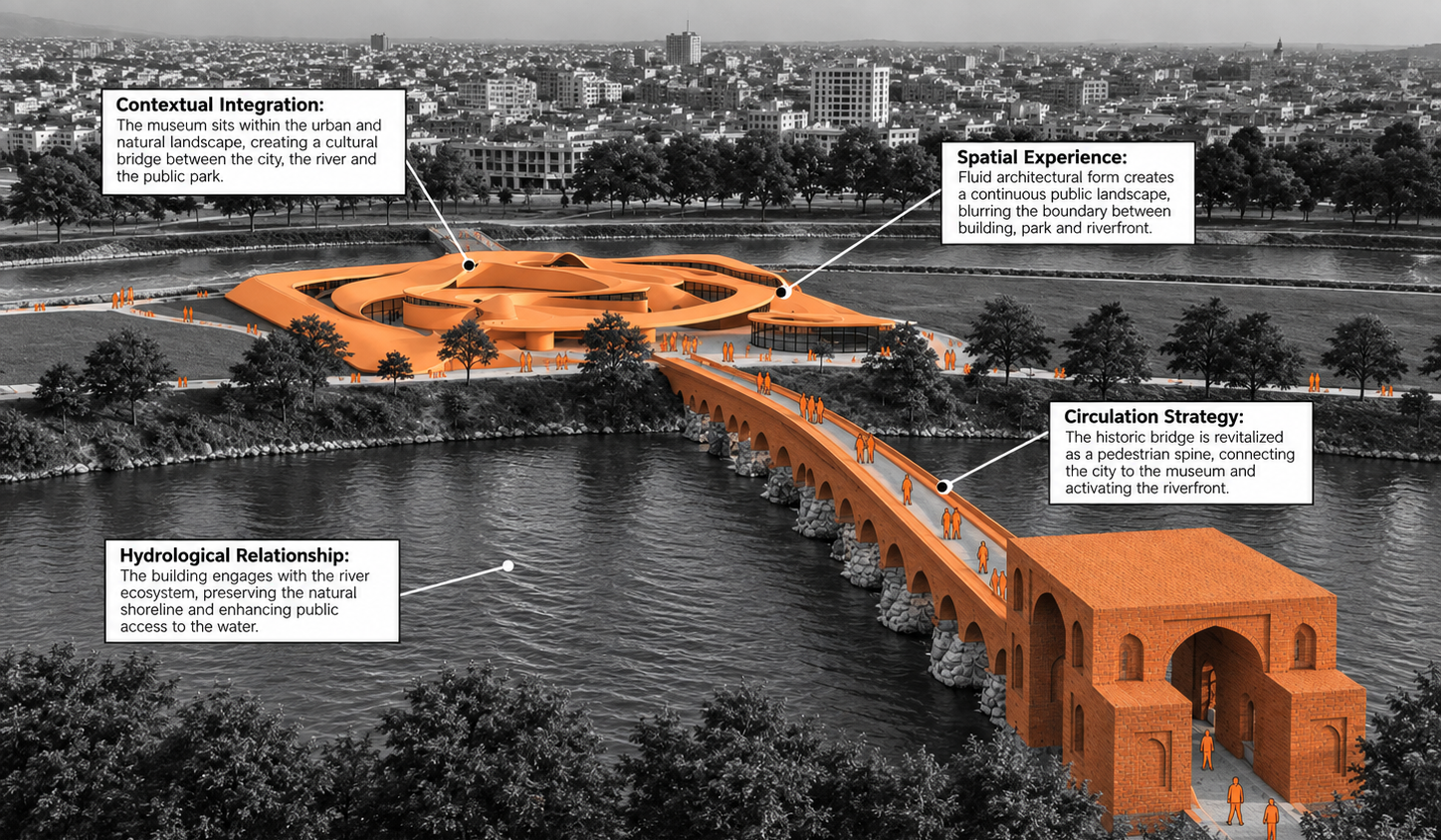
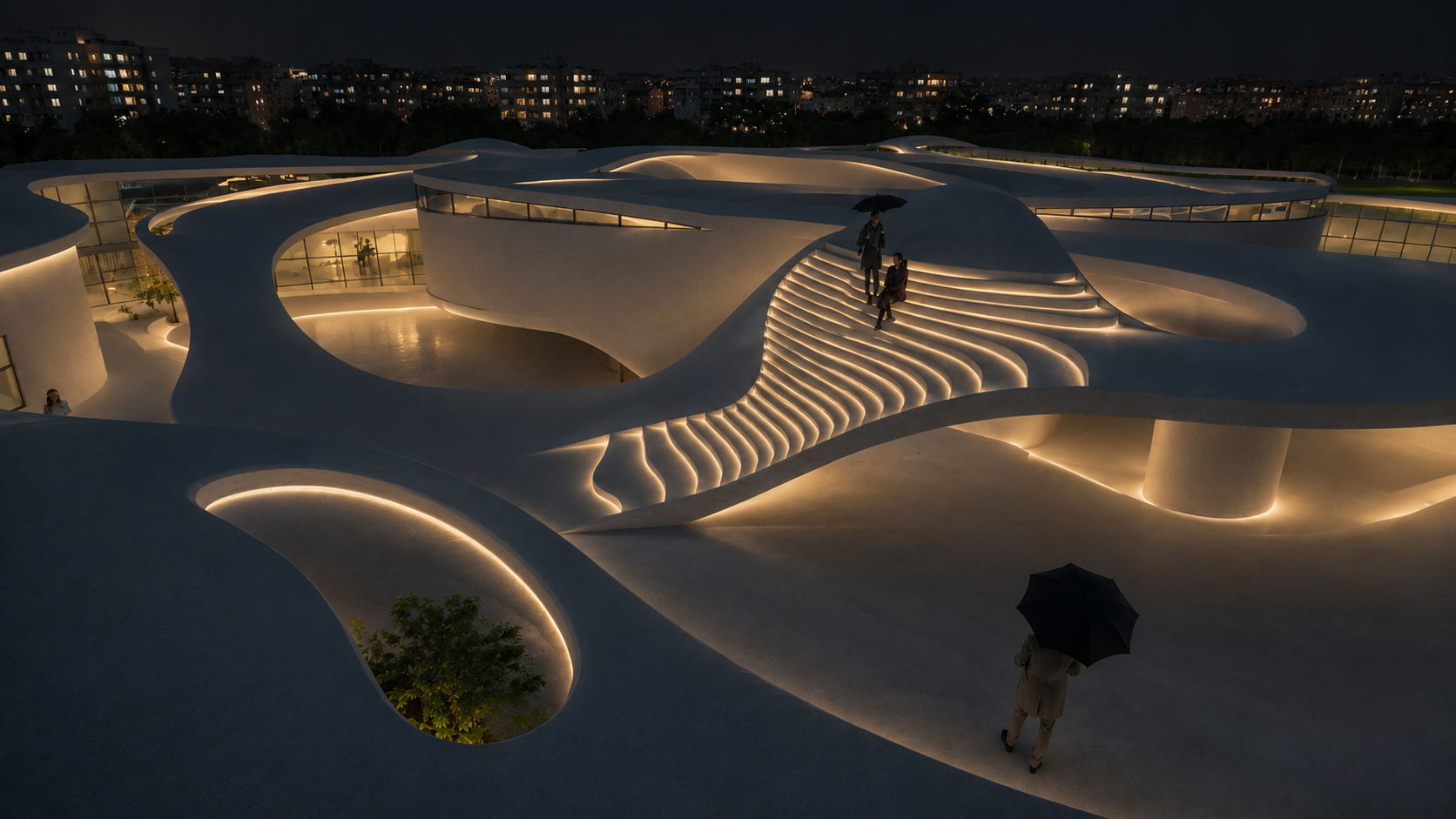
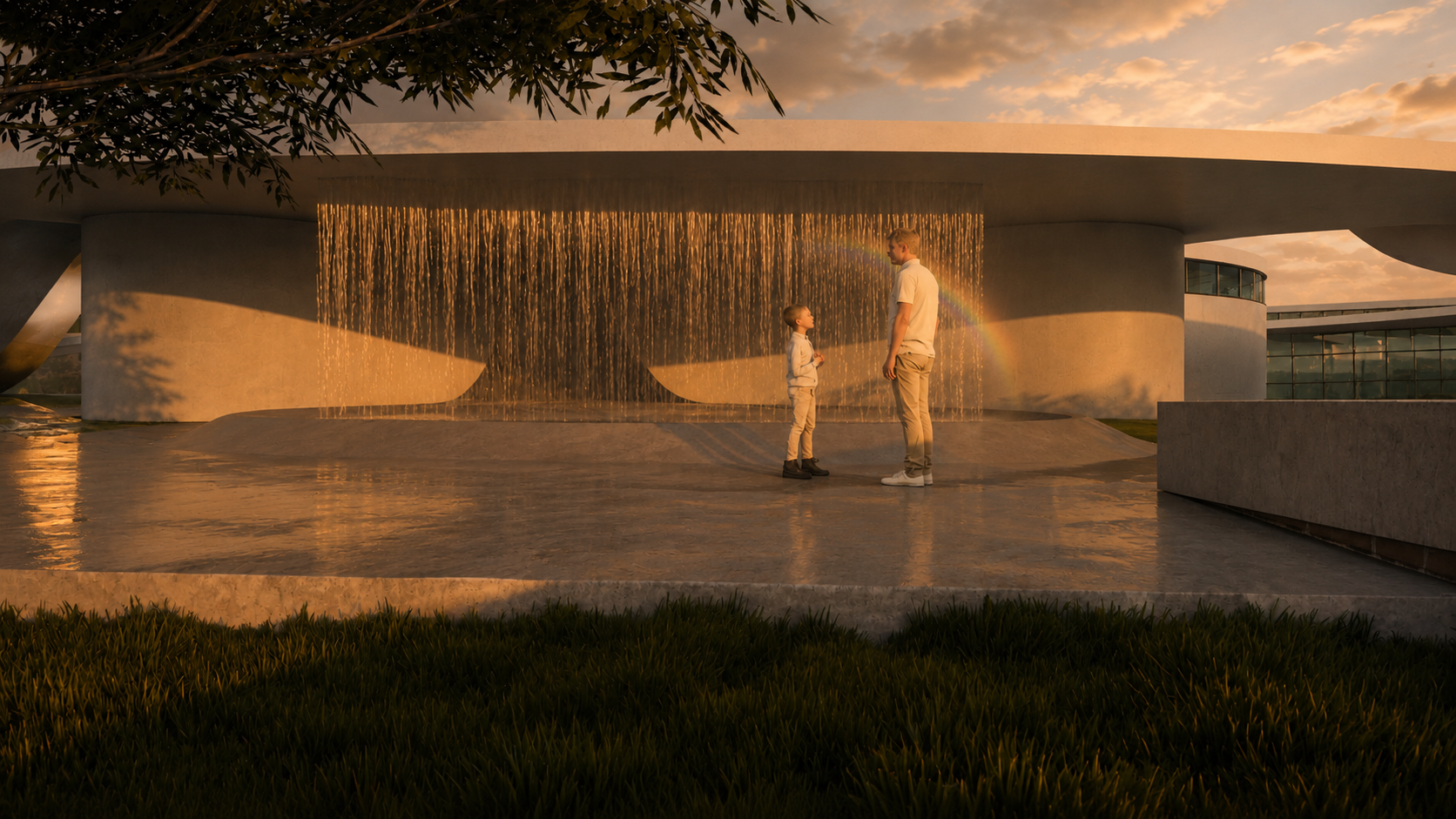
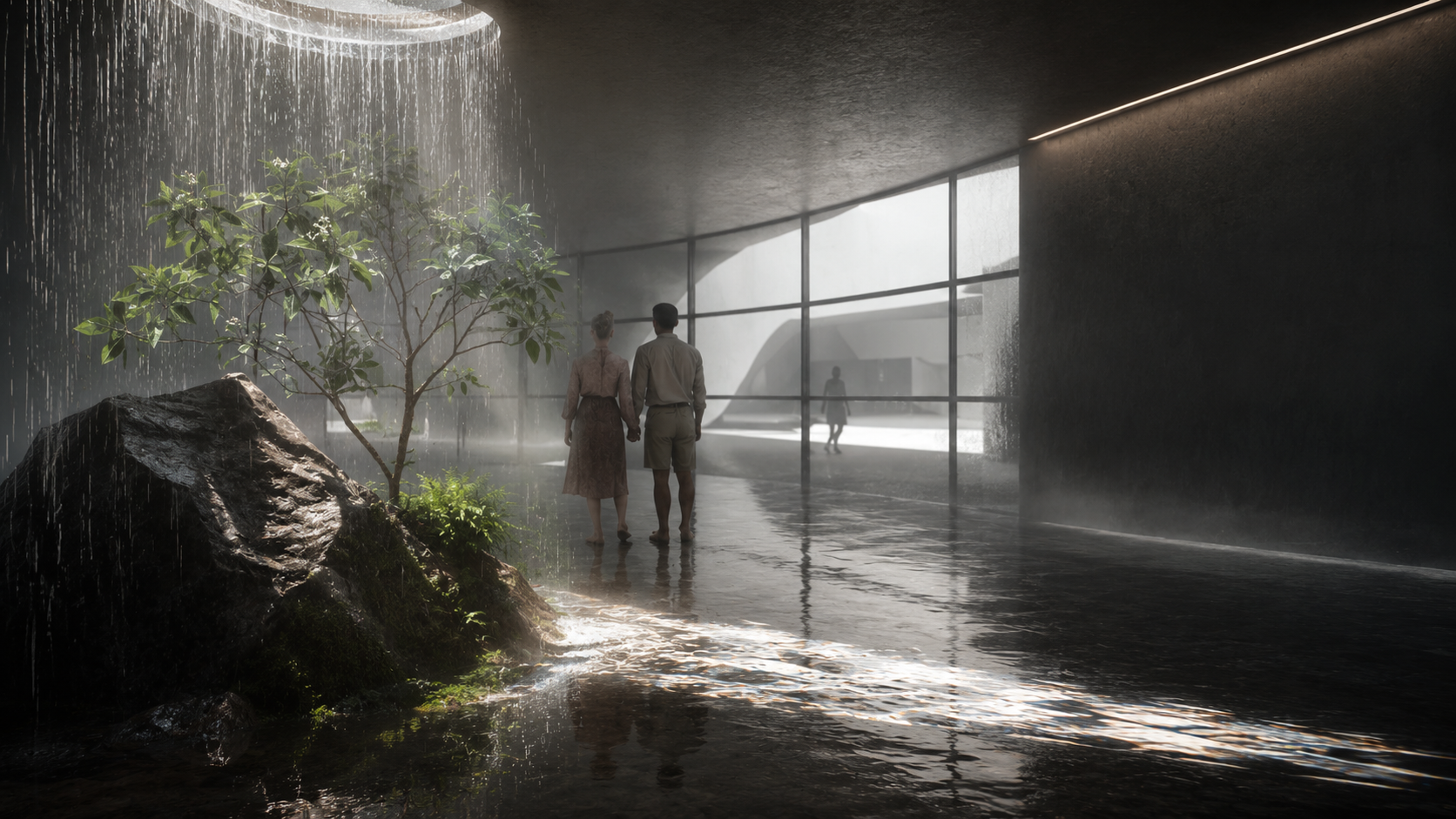
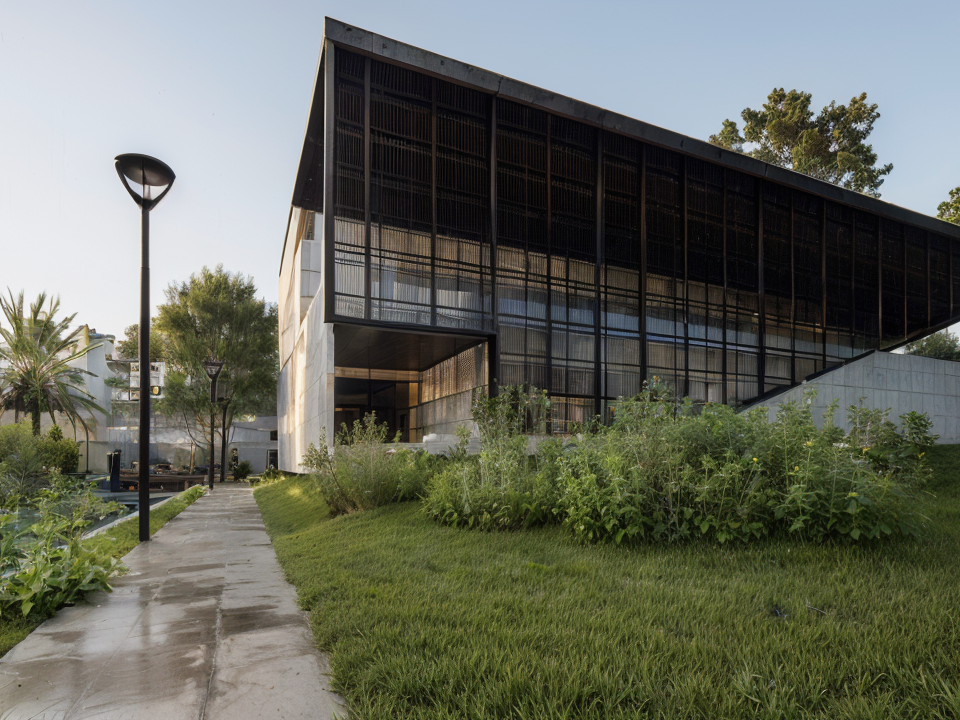
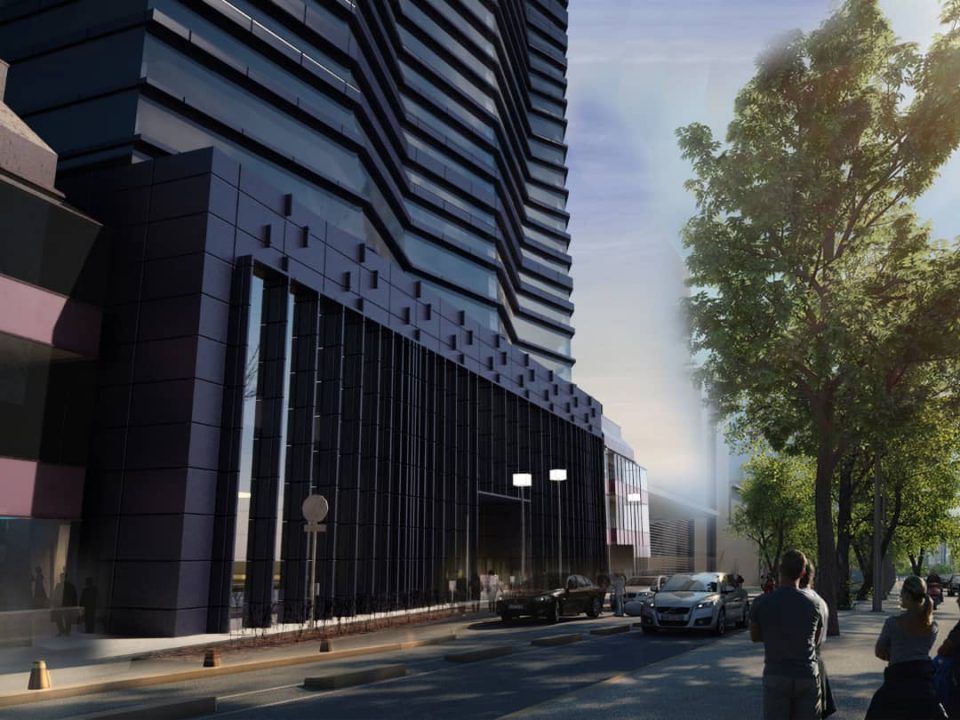
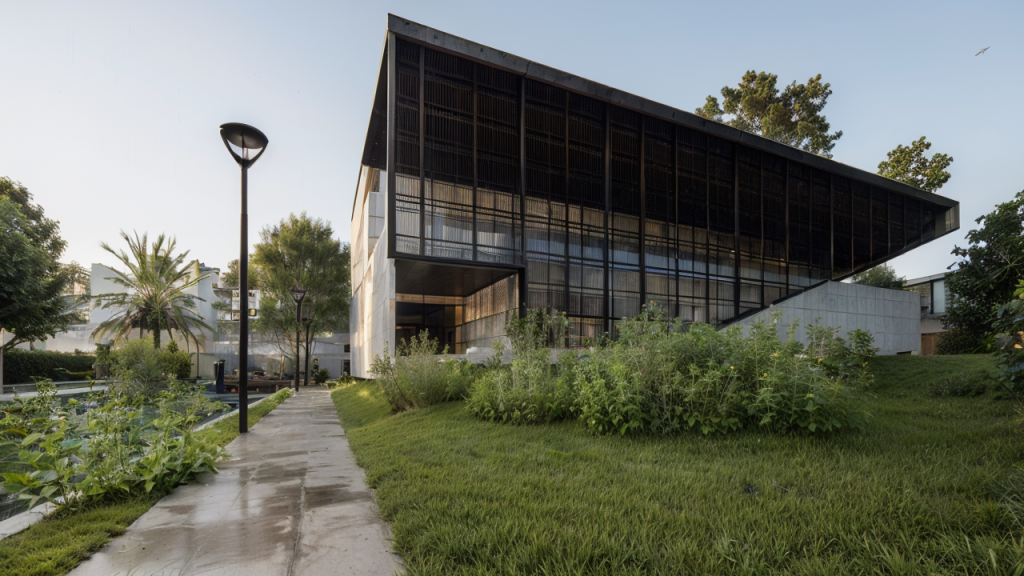
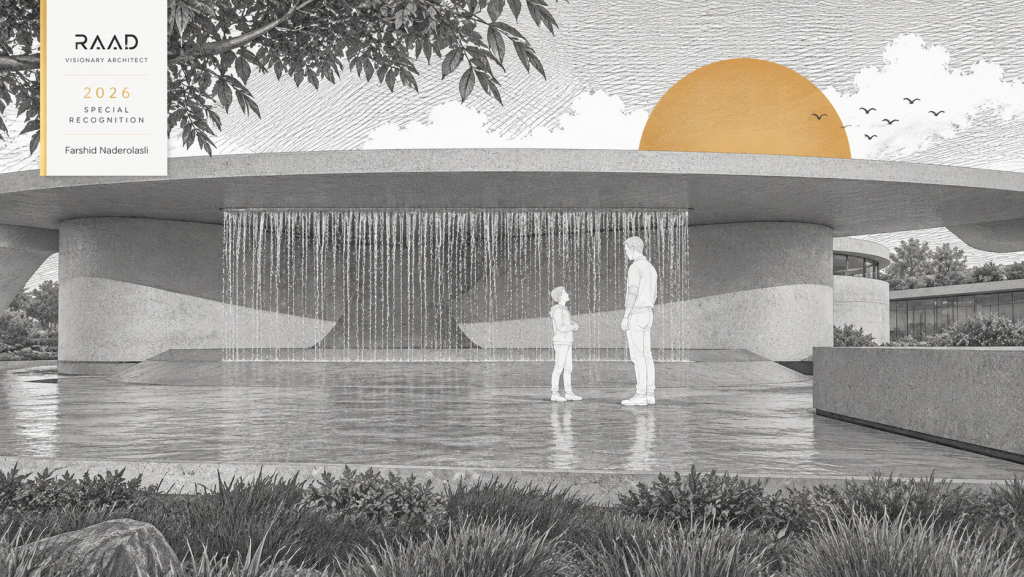
MEHRIN is a sensory-cultural project located within the historical landscape of the Zayandeh-Rud River in Isfahan, Iran. The project aims to establish a meaningful connection between water, historical memory, nature, and human perception. The unique location of the project, adjacent to the historic Shahrestan Bridge and embedded within an extensive green landscape along the river, provides the foundation for an architectural approach beyond a singular building object. Instead, the project operates as a continuous cultural landscape and a public realm where architecture, nature, and human experience are integrated. The main concept of the project is based on the idea of “Bridge Between Two Bridges”, where architecture acts as an intermediary between history, landscape, movement, and human presence. The integration of the Water Museum and the Museum of the Blind transforms the project beyond a conventional exhibition space into a multisensory environment, where water is not only visually perceived but also experienced through sound, touch, movement, humidity, and environmental changes.
Designed by Farshid Naderolasli
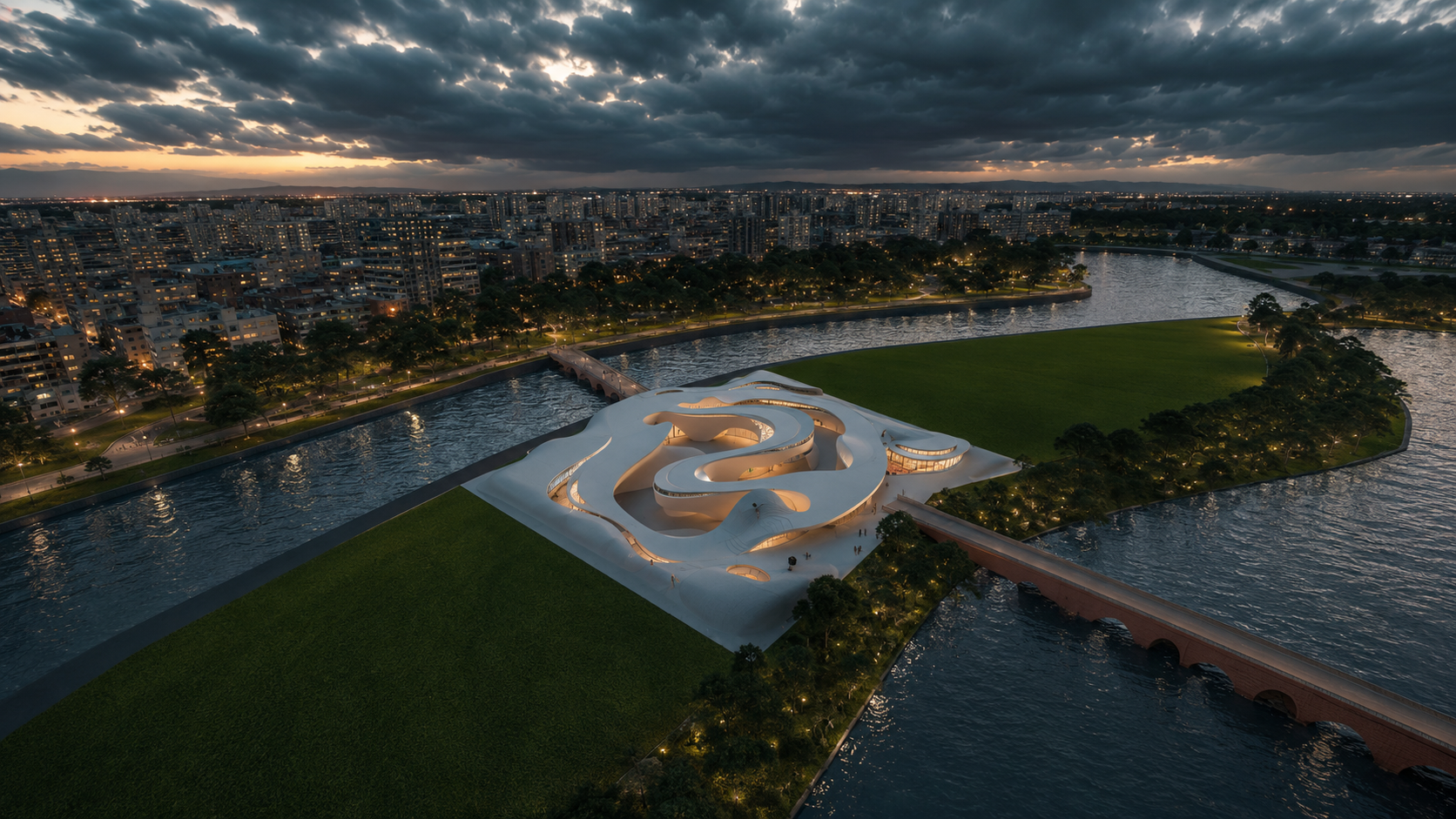
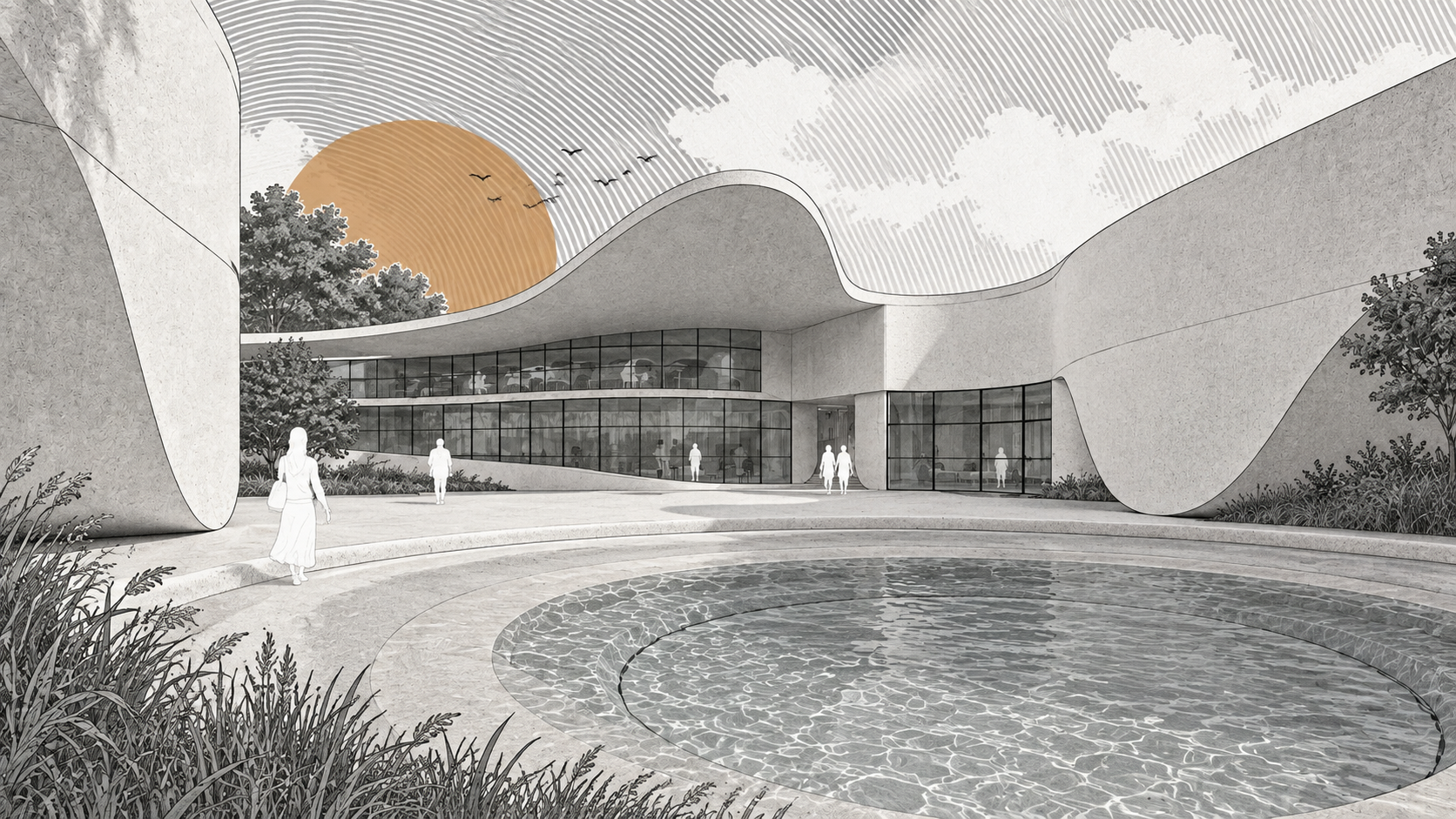
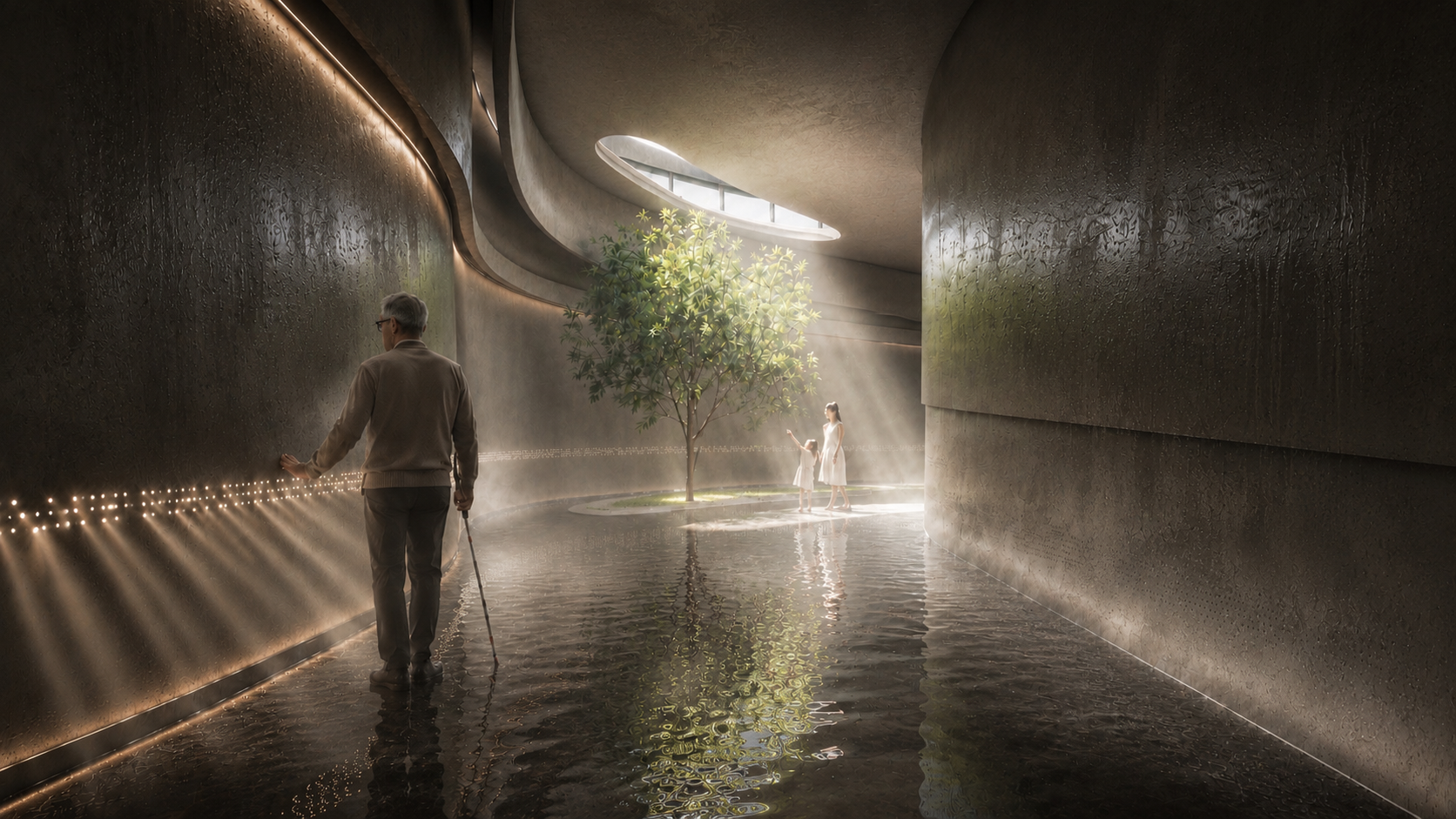
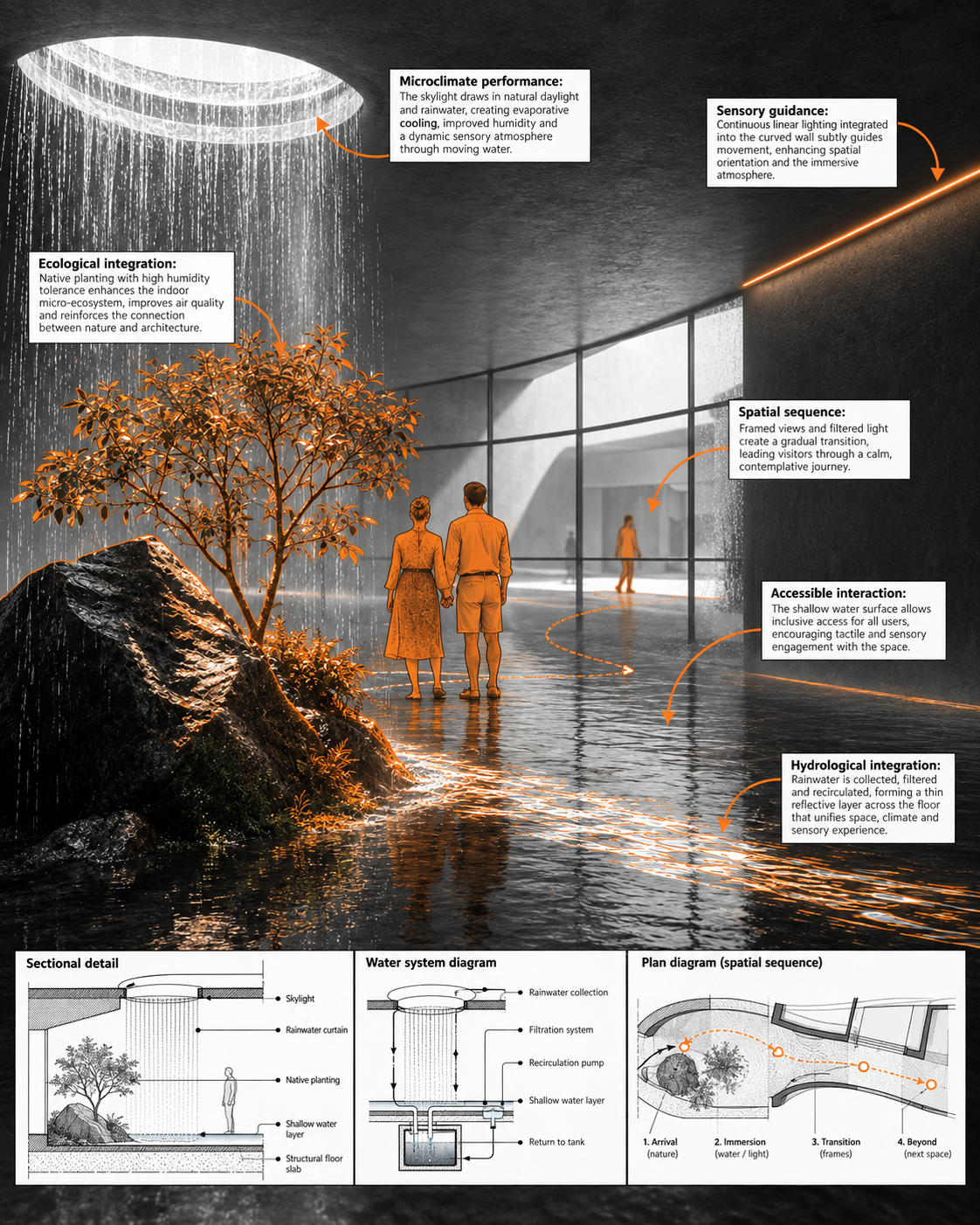
Mehrin Museum of Water & Blindness is a multisensory architectural project that explores spatial experience beyond vision. Water, light, sound, touch, smell, movement, and environmental sensations become integral elements of the architectural language.
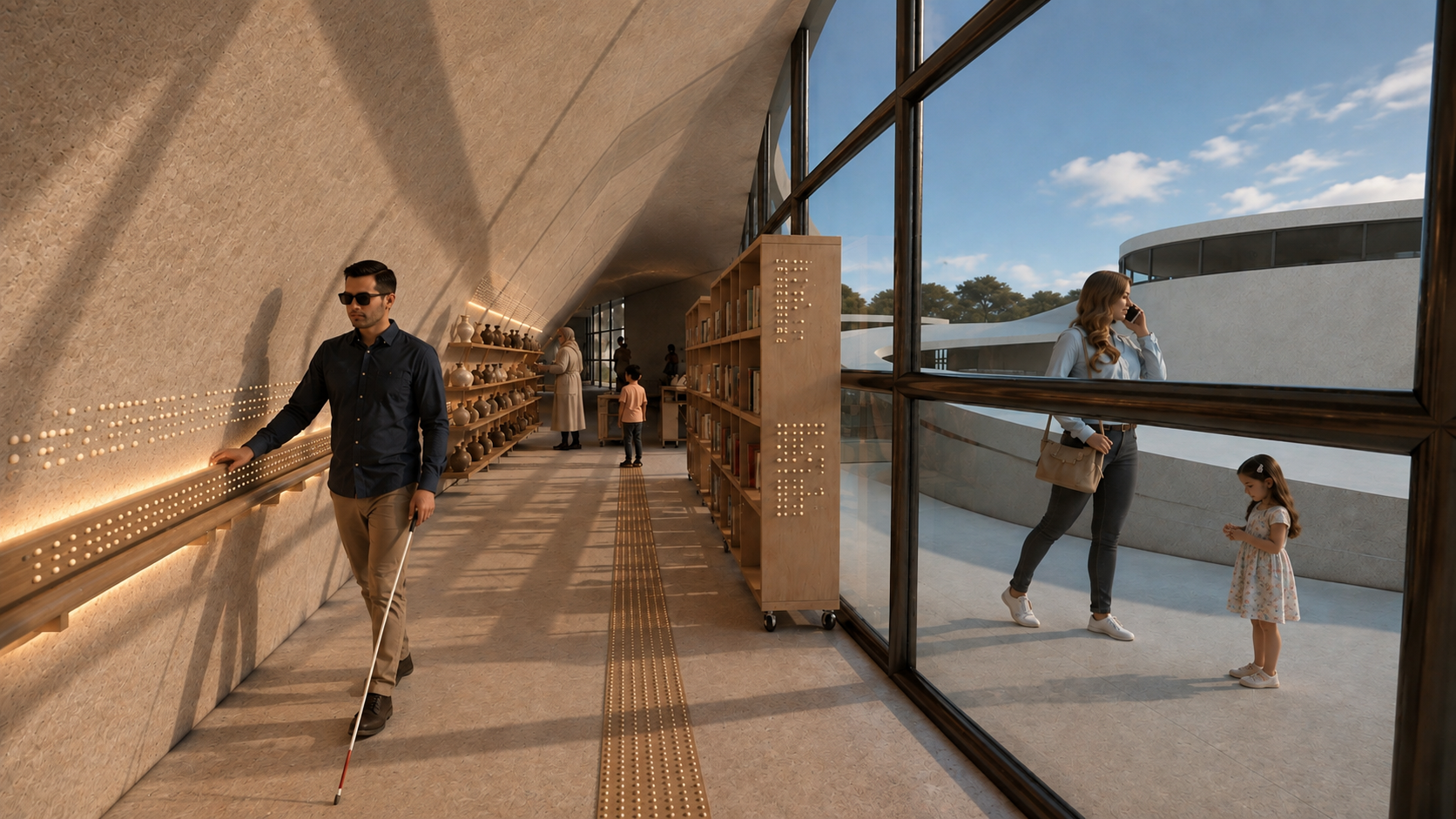
The project explores the relationship between humans, water, and architecture through a contemporary interpretation of the site, climate, and cultural narratives surrounding water. The experience of blind users is not treated merely as a functional requirement, but as an integral part of the project's architectural concept and spatial perception.
One of the project's distinctive elements is the architectural integration of Braille, where raised letters create a tactile reading experience for blind users while simultaneously producing a visual experience through light and shadow.
Architect: Farshid Naderolasli
Recognition: RAAD Visionary Architect
Jury Rationale
Mehrin was recognized for its ability to transform blindness from an accessibility requirement into an architectural opportunity, while establishing a deeper relationship between water, human perception, and collective life.
At the heart of the project is water as a symbol of life—not merely as a physical or environmental resource, but as a measure of how a society understands, protects, and values life itself.
From the jury’s perspective, the relationship a society establishes with people who are visually impaired or blind can also be read as an indicator of its cultural and human richness. Attention to blindness at both the individual and social levels reflects a broader capacity for empathy, inclusion, dignity, and shared responsibility.
In this sense, Mehrin connects two seemingly different forms of perception: the way a society perceives water as the foundation of life, and the way it perceives people whose experience of the world differs from the majority. Both become questions of awareness, responsibility, and continuity.
The project therefore extends beyond the conventional definition of an inclusive museum. Through water, sound, touch, light, movement, Braille, and multisensory experience, Mehrin proposes an architectural narrative in which the preservation of life, the recognition of human difference, and the continuity of culture become interconnected.
This reading gives the project a broader dimension: a society's capacity to care for its most essential resources and its most vulnerable members can be understood as part of the foundation of its cultural richness, human development, and civilizational sustainability.
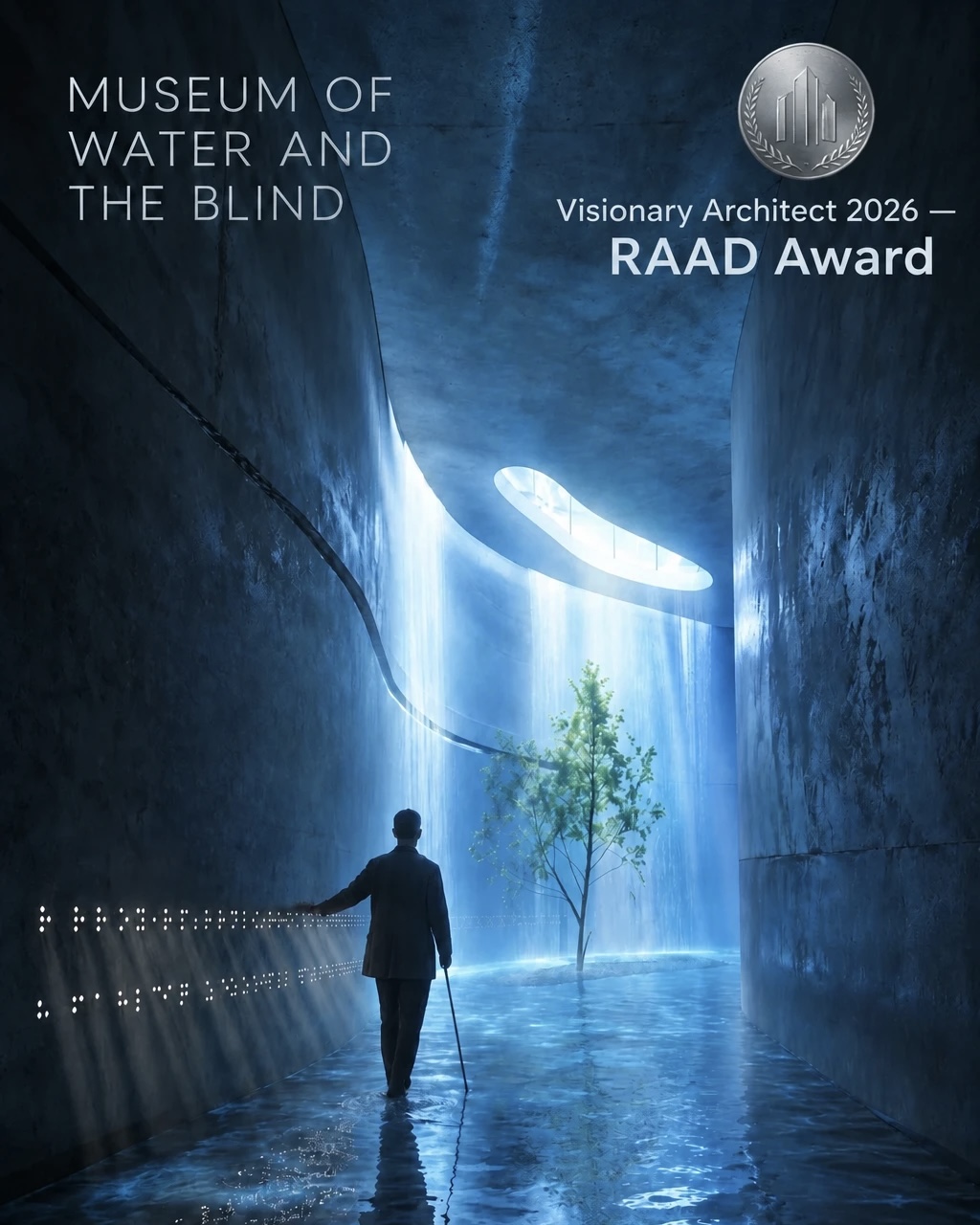
Special Recognition
Visionary Architect 2026
“How a society cares for water—and for those who experience the world differently—reveals something fundamental about its cultural richness, humanity, and civilizational sustainability.”